


Every day, organisations invest in technologies designed to protect their systems, networks and sensitive information. From Multifactor Authentication (MFA) and access controls to advanced monitoring and threat detection, these measures play an important role in strengthening cybersecurity.
Yet, even with these protections in place, one of the most overlooked security risks can emerge from something as simple as an everyday digital habit.
Saving a work password in a personal browser profile, forwarding a company email to a private inbox or storing business documents in personal cloud storage may seem convenient. However, these seemingly harmless actions can move sensitive organisational information beyond the security controls designed to protect it.
As we recognise Cybersecurity Awareness Month 2026 under the theme “Don’t Make It Easy for Them”, it is an opportunity to reflect on how everyday decisions can either strengthen or weaken an organisation’s data security.
Data Security Goes Beyond Technology
Data is one of an organisation’s most valuable assets, it informs business decisions, supports operational processes and enables collaboration between employees, customers and partners.
Protecting that data requires more than implementing the right technology, it also requires understanding how information is accessed, stored, shared and managed across the organisation.
As businesses become increasingly connected, employees often move between multiple platforms, applications and devices throughout the working day and while this flexibility supports productivity, it can also introduce security risks when the boundaries between personal and professional digital environments become blurred.
For example, connecting a work email account to a personal email service may create an additional point of exposure. Similarly, synchronising work credentials to a personal browser profile can place those credentials outside the organisation’s visibility and control.
If a personal account or connected service is compromised, organisational information may also be placed at risk.
The Hidden Risks of Convenience
Many data security incidents begin with actions that were never intended to create risk.
Employees may forward documents to personal accounts to access them more easily, save passwords for convenience or use familiar cloud storage platforms to share information.
While these actions may appear to improve efficiency, they can create unintended consequences.
When company information moves outside approved environments, organisations may lose visibility over where that information is stored, who can access it and whether it remains adequately protected. This can make it more difficult to monitor suspicious activity, enforce security policies and recover information following a security incident.
The same principle applies to third-party applications and browser extensions; granting an unapproved application access to company email, calendars, files or contacts can introduce additional security exposure.
The convenience of a digital tool should never outweigh the responsibility to protect sensitive information.
Multifactor Authentication Is Important, but Not a Complete Solution
Multifactor Authentication (MFA) has become an essential component of modern cybersecurity.
By requiring additional verification beyond a password, MFA significantly reduces the risk of unauthorised account access, however, it is important to recognise that MFA does not make an account impossible to compromise.
Cybercriminals may attempt to manipulate users into approving unexpected authentication requests, entering verification codes into fraudulent websites or disclosing credentials through phishing and other forms of social engineering.
An employee who receives an unexpected MFA notification may assume it is a routine system request and approving it without verification could unintentionally provide an attacker with access. This demonstrates why cybersecurity awareness remains important even when strong technical controls are in place.
Employees need to understand not only how security technologies work, but also how to recognise when something does not seem right.
A simple principle can make a meaningful difference: if you did not initiate an authentication request, do not approve it.
Don’t Make It Easy for Them: Building Stronger Security Habits
The theme for Cybersecurity Awareness Month 2026, “Don’t Make It Easy for Them”, reinforces an important message: reducing cybersecurity risk often begins with the actions we take before an incident occurs. Cybercriminals frequently look for opportunities created by weak credentials, exposed information, unnecessary access permissions and human error. While no organisation can eliminate every cybersecurity threat, employees can help reduce the opportunities available to attackers by adopting consistent security practices.
These include:
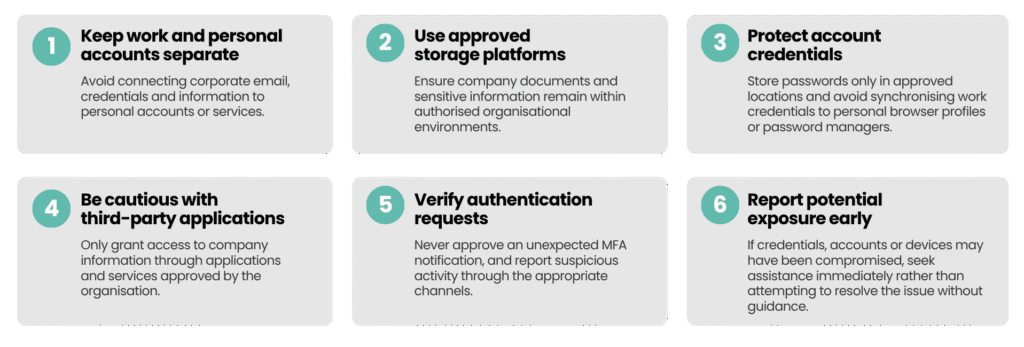
Individually, these practices may appear straightforward, however as a collective, they contribute to a stronger organisational security culture.
Creating a Culture of Shared Responsibility
Cybersecurity is often viewed as the responsibility of IT departments and security specialists.
While these teams establish policies, implement controls and respond to threats, protecting organisational information requires participation across every department. Employees interact with sensitive data in different ways, from financial records and customer information to project documentation and internal communications., therefore, very interaction presents an opportunity to apply good security practices.
This is why cybersecurity awareness should extend beyond annual training programmes or policy acknowledgements and should become part of how employees approach their everyday work.
Organisations also have a responsibility to make secure behaviour practical, this is why clear policies, accessible support channels, approved collaboration tools and ongoing education is crucial to help employees understand what is expected and how to respond when they encounter potential risks.
When employees are confident about identifying suspicious activity and reporting concerns, organisations are better positioned to detect and address security issues before they escalate.
Protecting Data Starts With Us
As organisations continue to embrace digital technologies, cloud platforms and increasingly connected ways of working, protecting information will remain a fundamental business priority.
Strong cybersecurity depends on the relationship between people, processes and technology. Technical controls provide essential protection, but their effectiveness is strengthened when employees understand the role they play in safeguarding organisational information.
Cybersecurity Awareness Month provides an opportunity to reinforce that responsibility and encourage better habits across the business.
The 2026 theme, “Don’t Make It Easy for Them”, is a reminder that attackers do not always need sophisticated techniques when everyday security gaps provide opportunities.
By keeping personal and professional accounts separate, using approved systems, protecting credentials and remaining alert to suspicious activity, employees can help reduce unnecessary exposure and strengthen their organisation’s overall security posture.
Ultimately, data security is not only defined by the threats an organisation can detect or the attacks it can prevent, it is also shaped by the everyday decisions that help keep sensitive information protected.
