


By: Austin Reid – Solution Architect
South Africa experiences an unprecedented rise in cyber attacks throughout its territory. The number of cyber incidents has risen dramatically during the past few months because of data breaches and ransomware attacks and phishing, and credential theft incidents.
The number of local account compromises during the first quarter of 2024 reached 34.5 million, which positions South Africa as the second-largest victim of data breaches in Africa. The national watchdog processed 2,374 breach notifications during the 2024/25 financial year, but security-compromise events have shown a significant rise in recent times.
The Surge in AI Cybersecurity, South African Challenges
Organisations must now face cybercriminals who show no interest in waiting for security improvements. A major cybersecurity firm published its bi-annual threat report, which showed the country leading Africa in ransomware and infostealer attacks during the second half of 2024. South Africa experienced more than 40% of all ransomware attacks throughout Africa during June and November 2024.
The increasing complexity of cyberattacks creates a major concern because AI-powered threats are becoming more sophisticated. Cybercriminals use generative AI to create authentic phishing messages, which include local language content and cultural references, while they also use AI to perform vulnerability scanning and reconnaissance and impersonate authorised entities.
Organisations face an uncomfortable reality because their cybersecurity defences remain insufficient. The survey reveals that South African organisations lack sufficient cybersecurity awareness training for their staff because they struggle to find enough qualified cybersecurity professionals.
The situation has reached a critical point. The attacks have targeted essential infrastructure, government agencies, telecom providers, retail businesses, and financial institutions, which have all resulted in financial losses and data leaks that lead to reputational damage.
The situation appears bleak, but there exists a glimmer of hope. The same advanced technologies which criminals use for their attacks can transform into defensive tools when properly applied. Organisations can transition from basic security to advanced predictive security through the implementation of AI-based detection systems, and anomaly analysis and automated incident response capabilities. AI functions as an essential tool for organisations operating in areas with limited cybersecurity personnel availability.
The human factor stands as the main security weakness which technology cannot fix. The majority of security breaches stem from employees using weak passwords multiple times and falling victim to phishing attacks and social engineering tactics and making mistakes during their work activities. Organisations need to establish a security culture through ongoing employee training and executive backing and strict patch implementation and vendor risk assessment and contemporary security system deployment.
Building Resilient AI Cybersecurity: South Africa Strategies
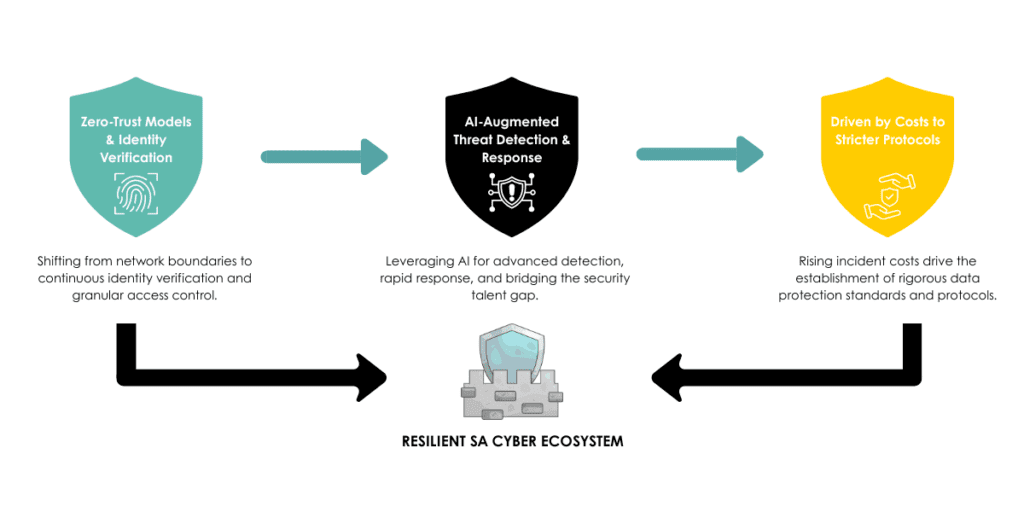
South African cybersecurity will experience three fundamental transformations during its upcoming development period:
- The defence of organisations will shift toward Zero-Trust models, which depend on identity verification and access control instead of traditional network boundaries for protection.
- The combination of AI technology with cyber-defence systems will create advanced threat detection capabilities and fast response times and improved security coverage despite existing talent shortages.
- The combination of rising attack expenses and security incidents will drive businesses and government institutions to establish stricter data protection standards and security protocols.
South Africa has the opportunity to transform from being the most targeted nation into one of the most secure. Organisations need to work together with public and private entities while building cybersecurity capabilities and making security an essential part of their operational framework. The right blend of security awareness, technological advancement, and strategic planning will create a protected digital environment where AI functions as a protective mechanism instead of an offensive tool.
